Immersion
Learn where material moves, cash sits and decisions are actually made.
THE OPERATING MIND · INWARD
The business, finally able to think with itself.
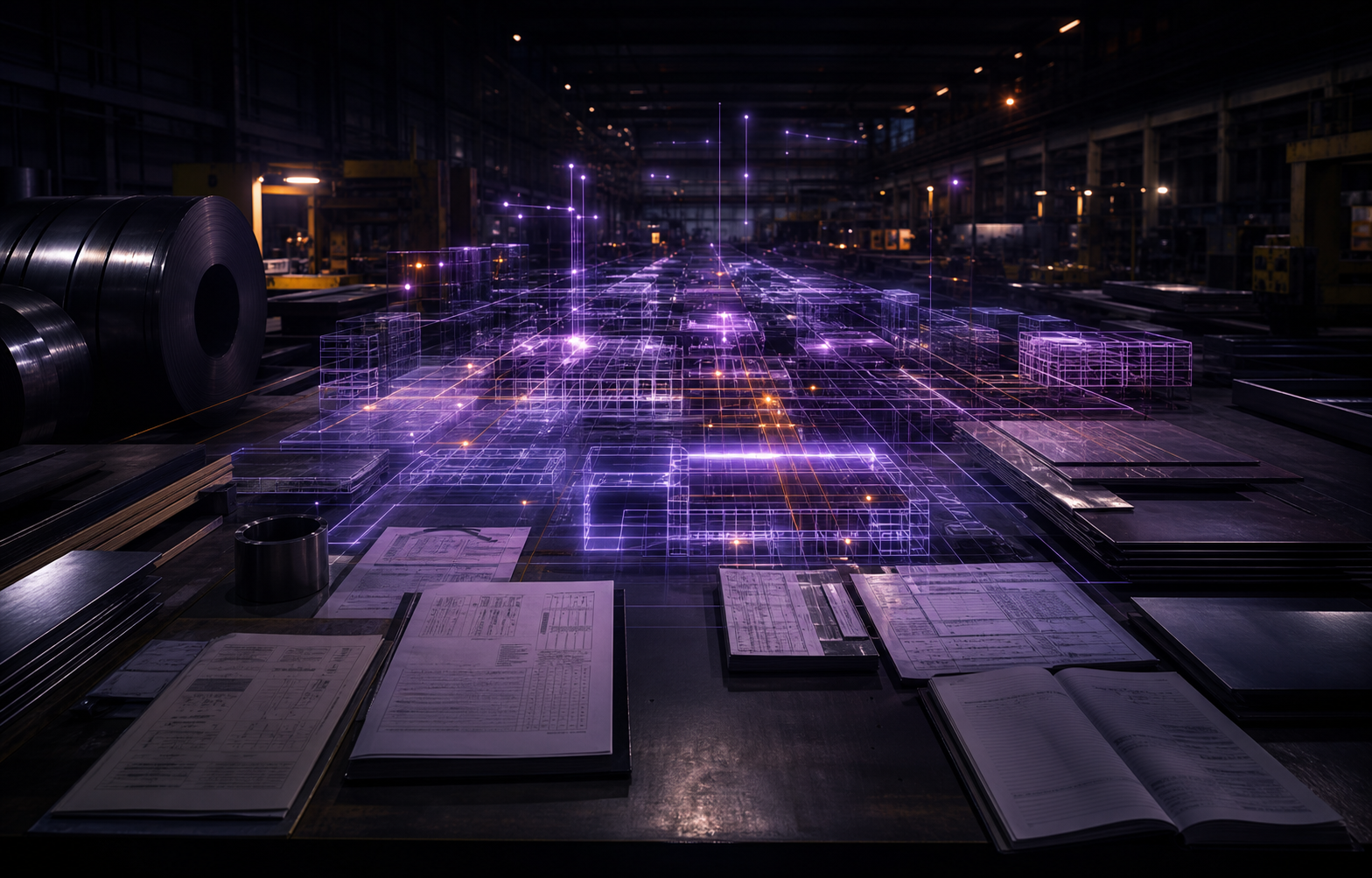
THE MODEL
The House Model turns drawings, invoices, production logs, contracts and working decisions into one grounded operating mind. Anyone in the business can ask it a real question in plain language. It answers exactly where the numbers matter, and fluently where context does.
THE ARCHITECTURE
The deployment is specific to the enterprise. The method remains consistent enough to deepen, maintain and extend.
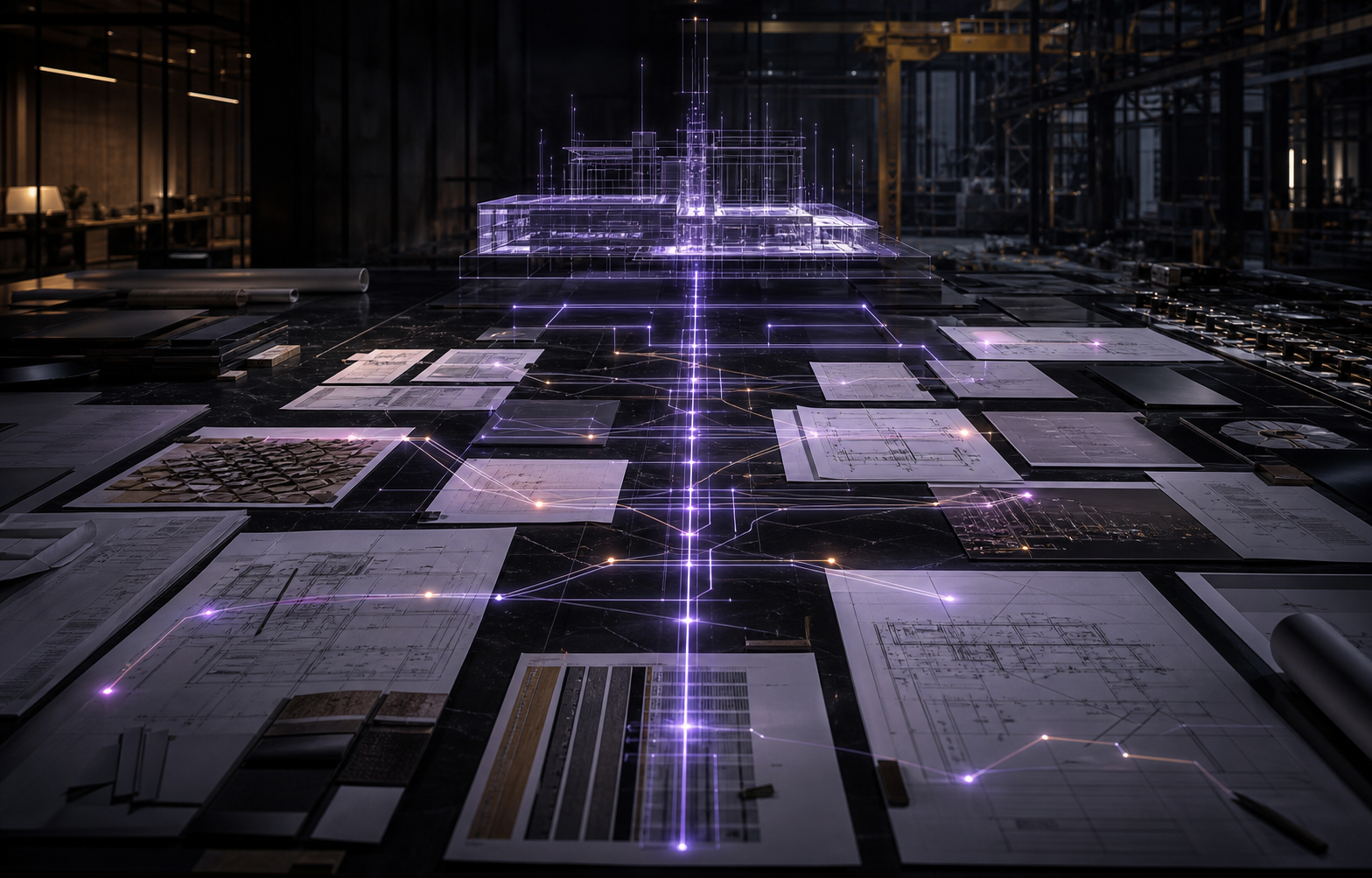
Learn where material moves, cash sits and decisions are actually made.
Validate the company’s own records before the model is allowed to reason over them.
Join deterministic calculation to grounded language and operational context.
Run it under the company’s identity, on the knowledge only that company has.
Keep the mind current as the operation, records and questions change.
Cash, material and work trapped inside the operation—visible only when its systems are read together.
Work already delivered and value already created, but never converted because the process never caught it.
The leaks, dependencies and operating risk that ordinary dashboards surface only after they become a problem.
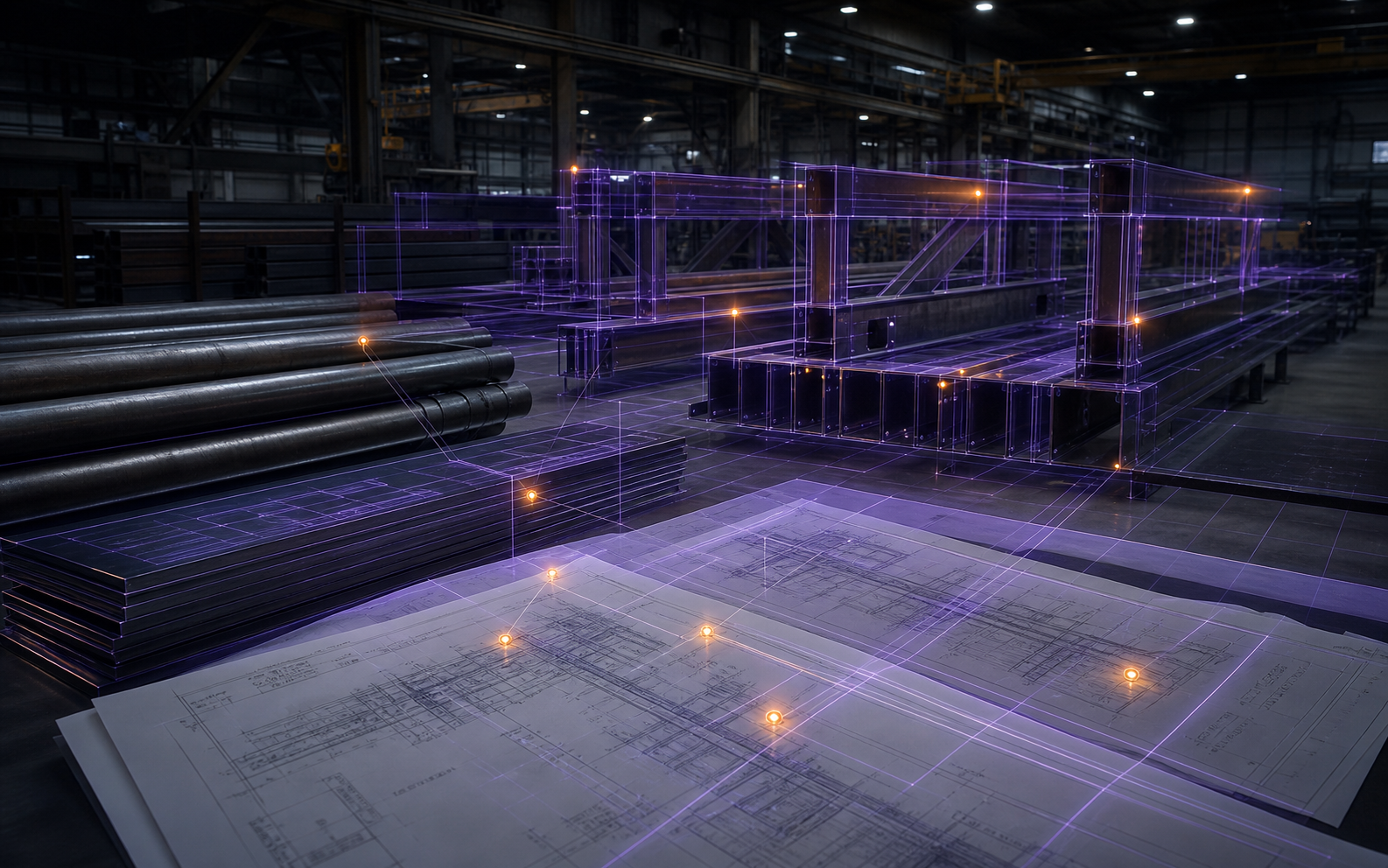
THE OPERATING QUESTION
THE PRODUCT SURFACE
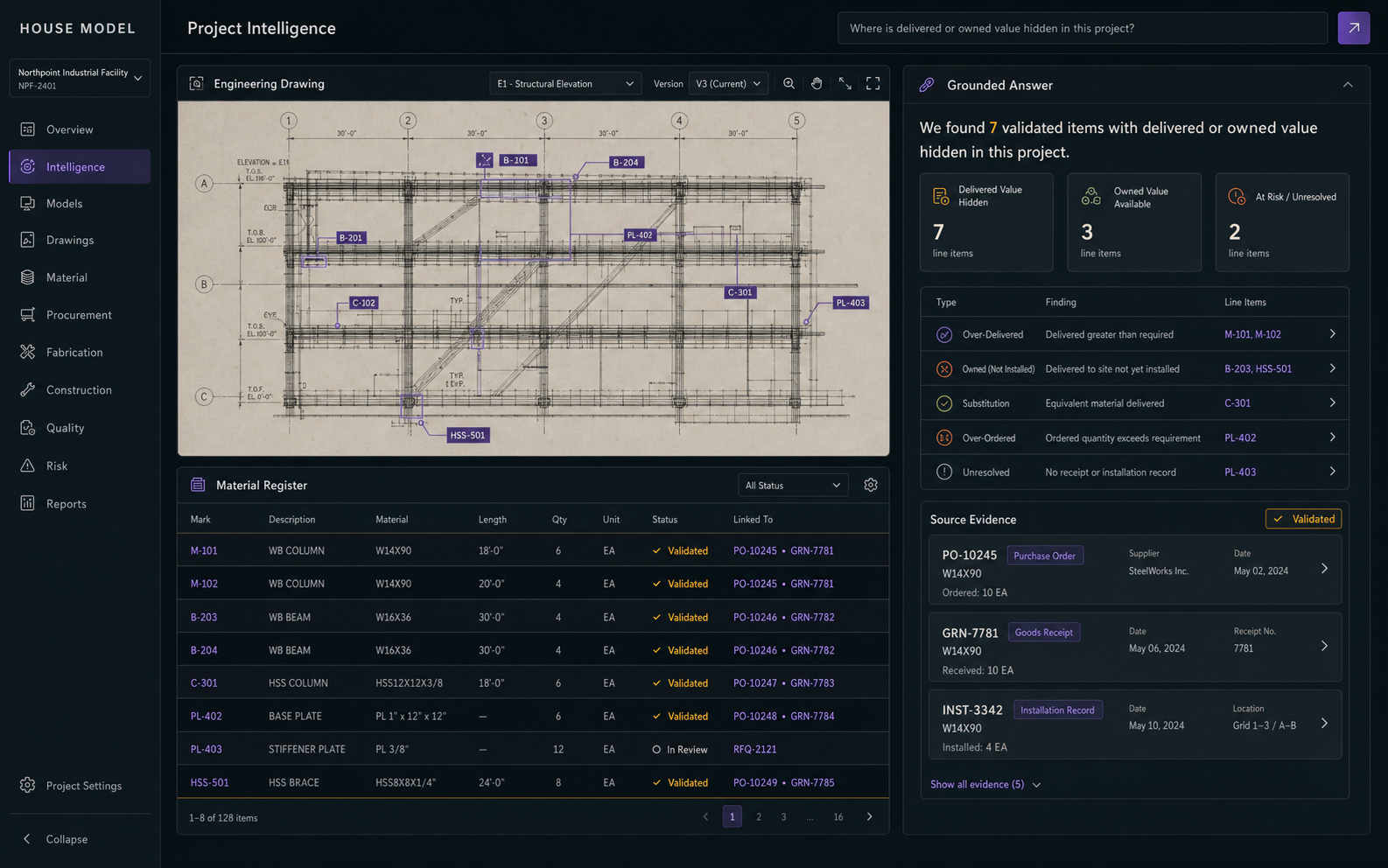
The operator can move from drawing mark to material status, grounded answer and source evidence without leaving the project context. Every finding remains inspectable before it becomes an action.
OPERATING CASE · FLAGSHIP DEPLOYMENT
The House Model reconciled what the engineering drawing required with what procurement ordered, what stores received, what the site installed and what the commercial record recognised.
Drawings, material registers, purchase records, receipts and installation status each described a different version of the same project. The operator could not reliably see delivered value, material still owned or items left unresolved.
Structural drawings, drawing marks, material registers, purchase orders, goods receipts, installation records and project-commercial status.
Resolve every drawing mark, link it to material and procurement records, compare required, ordered, received and installed state, then validate each finding back to source.
A working project-intelligence surface that separates delivered, owned and unresolved value, with every answer inspectable at the document and line-item level.
Read each engineering mark as a material, quantity and location requirement—not merely as drawing text.
Connect that requirement to the material register, purchase order, goods receipt and installation record.
Separate what was required, ordered, received, installed, substituted and still unresolved.
Return the operating answer with the exact source record and line item that supports it.
The result is not a report about the project. It is a project view the operator can keep questioning—and every answer remains grounded in evidence the team already owns.
HOW IT HOLDS
We begin with immersion in the real operation, establish validated ground truth, build the deterministic spine, deploy it under the company’s name and keep it current as the business changes.
The model is built on proprietary operating knowledge no competitor has—and handed to the company that created that knowledge.
WHO IT SERVES
ONE ENGINE · EVERY LAYER CONNECTED
Next modelBrahma→